Classifications & Uses Of Metal Foam
Aug 02, 2022
Special metal materials with foam porosity are referred to as Metal Foam. It has a high air permeability, and practically all of its pores are connected. Metal foam provides a number of positive advantages due to its distinct structural features, including low density, effective heat and sound insulation, and the capacity to absorb electromagnetic radiation.
Classifications for Metal Foam
The most common types of metal foam are those made of copper, nickel, iron, and other alloys.
Copper foam can be used to create battery anode (carrier) materials, catalyst carriers, and electromagnetic shielding materials because it has better conductivity than nickel foam, is more ductile, and is easier to prepare.
Particularly, copper foam is employed as the battery electrode's base material, which has apparent benefits. The lower corrosion resistance of copper than that of nickel, however, restricts its use.
Nickel foam has a high specific surface area, capillary force, and gas performance due to its linked pore structure and high porosity. It is primarily utilized as a functional material to create heat exchangers, atomizers, fluid filters, and catalytic converters.
Applications for Metal Foam
Metal foams are used as lightweight, heat-transfer support structures in the aerospace and missile industries. Because they can be welded, glued, or electroplated onto the structure, they can be made into sandwich bearing members, such as the support for the metal shell of the wing, the anti-collapse structure, and so on. This material has long been used as a core material for aircraft clips.
The acceleration and deceleration of modern elevators at high frequency and high speed also require the lightweight structure of foamed metal which has both energy absorption and bearing characteristics to reduce energy consumption. Cylindrical shells are widely used in engineering structures, such as aircraft fuselages and offshore oil RIGS. Thin-walled cylindrical shells are widely used in engineering structures.
Copper foam is appropriate for fasteners because it is simple to make and simple to deform.
Numerous organic, inorganic, and metallic materials can also be reinforced using metal foams.
For instance, nickel foam reinforced aluminum alloy (NFRA) material is created by encasing molten aluminum in the material after it has solidified.
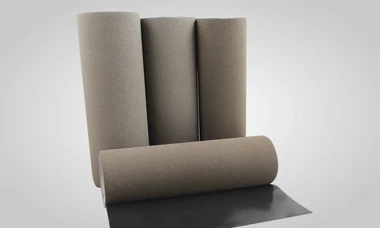
In order to create a variety of laminated composites, foam metal is a very ideal lightweight roll material for carrying a variety of panels, shells, and tubes. Sandwich panels are a common example of how porous materials are used in structural elements. Modern airplanes use sandwich panels with glass or carbon fiber composite skin. To provide the sandwich panel a significant specific bending stiffness and specific bending strength, this layer of skin is separated from the resin honeycomb material by metal, aluminum, paper, or rigid polymer foam. The same technology has been expanded to various uses where weight is an important indicator, such as moving buildings, sleds, spaceships, and racing boats.
Metal foams are mostly used for buffer protection, which requires the capacity to absorb energy while limiting the maximum force acting on the object to be protected below the threshold causing damage. Such applications work nicely with porous foams. Metal foams' tensile strength can be varied widely by adjusting their relative density.