


What Is Copper Foam
Copper foam is a rigid, three-dimensional network of interconnected copper ligaments that form cells with open pores. Copper Foam contains completely solid ligaments (as opposed to sintered or hollow ligaments) which makes it stronger and more thermally conductive. Its properties are fully customizable, which allows its performance characteristics to be optimized for a broad range of applications. It is commonly used in applications that benefit from very high thermal conductivity and surface area, and from the nature-mimicking morphology of the rigid cellular structure.
Advantages of Copper Foam
High Thermal Conductivity
The foam can transfer heat quickly and efficiently. This property makes it suitable for heat transfer applications in motors, electronics, and other devices. It can also act as a heat sink or a heat exchanger in various thermal management systems.
High Electrical Conductivity
Copper is an excellent conductor of electricity. It is widely used in electrical applications such as batteries, electrodes, capacitors, and electrical insulation materials. It can also provide electromagnetic shielding and interference reduction in electronic devices and circuits.
High Porosity
The highly porous structure of the foam makes it lightweight and flexible for different uses. The large number of pores gives it a larger surface area, which enhances its performance in catalysis and filtration applications.
Good Mechanical Properties And Processability
It has good strength and durability due to its solid copper matrix. It can be processed and shaped easily due to its malleability.
Good Electromagnetic Shielding And Noise Absorption Function
It can block or reduce electromagnetic waves and noise due to its porous structure. It helps in protecting electronic devices and circuits from external interference and noise. It can improve the signal quality and performance of electronic devices and circuits.
Corrosion Resistance
It is highly resistant to corrosion. The foam sheet has a stable pH range between 4.5 and 8.5, and copper is said to resist corrosion in this pH range. The strong oxide coating on copper also helps in corrosion resistance.
-

Material: copper, pure copperThickness: 0.1-35mm, can be customizedAperture: 0.1-10mmPorosity: 60-98%, can be customizedThrough Porosity: ≥98%, can be customizedBulk Density: 0.1-3.0g/cm³, can be
Add to Inquiry -
Material: copper, pure copperThickness: 0.1-35mmAperture: 0.1-10mmPorosity: 60-98%, can be customizedThrough porosity: ≥98%Bulk density: 0.1-3.0g/cm3, can be customizedPPI (number of holes per
Add to Inquiry -
Material: copper, pure copperThickness: 0.1-35mm, can be customizedAperture: 0.1-10mmPorosity: 60-98%, can be customizedThrough porosity: ≥98%, can be customizedBulk density: 0.1-3.0g/cm³, can be
Add to Inquiry -
Material: copper, pure copperThickness: 0.1-35mm, can be customizedAperture: 0.1-10mmPorosity: 60-98%, can be customizedThrough porosity: ≥98%, can be customizedBulk density: 0.1-3.0g/cm³, can be
Add to Inquiry -
Material: copper, pure copperThickness: 0.1-35mmAperture: 0.1-10mmPPI (number of holes per inch): 5-150Porosity: 60-98%, can be customizedSize: various sizes and shapes can be customized
Add to Inquiry -
Material: copper, pure copperThickness: 0.1-35mmAperture: 0.1-10mmPorosity: 60-98%, can be customizedThrough porosity: ≥98%Bulk density: 0.1-3.0g/cm3, can be customizedPPI (number of holes per inch):
Add to Inquiry -
Material: copper, pure copperThickness: 0.1-35mmAperture: 0.1-10mmPorosity: 60-98%, can be customizedThrough porosity: ≥98%Bulk density: 0.1-3.0g/cm3, can be customizedPPI (number of holes per inch):
Add to Inquiry -
Material: copper, pure copperThickness: 0.1-35mm, can be customizedAperture: 0.1-10mmPorosity: 60-98%, can be customizedThrough porosity: ≥98%, can be customizedBulk density: 0.1-3.0g/cm³, can be
Add to Inquiry -
Material: copper, pure copperThickness: 0.1-35mm, can be customizedAperture: 0.1-10mmPorosity: 60-98%, can be customizedThrough porosity: ≥98%, can be customizedBulk density: 0.1-3.0g/cm3, can be
Add to Inquiry


why choose us
Our factory
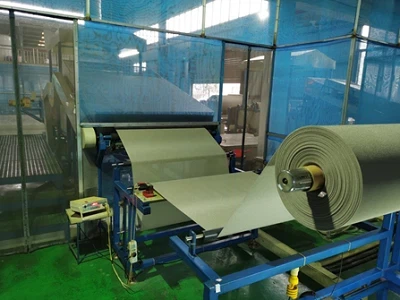
Yi Yang Foammetal New Material Co., Ltd. is a factory that produces porous metal materials. We have been specialising in this field for over 10 years since our establishment in 2015.
Our products
Our primary products include high-quality metal foam, EMI shielding materials, and surface electroplating metal materials. Our range of products includes nickel foam, copper foam, iron foam, and iron-nickel foam. We also offer conductive foam, conductive fabric, and conductive fabric tape for shielding purposes.
Professional team
We have our own R&D team and 28 patents. R&D team and advanced technics to effectively provide all kinds of standard products and customized products. There are advanced continuous production lines independently designed and invented.
Our service
24-hour online pre-sales and after-sales service to provide you with a professional and timely response. We have been exporting for nearly ten years, and have accumulated rich experience. We are familiar with documents, certificates and export procedures to provide you with professional export services.
Electrode Materials
Due to its excellent conductivity, it can be used as the electrode frame material for new batteries. As an excellent choice of electrode fluid collector for double-layer capacitor, it has also become a large hidden market for copper foam applications. As an electrode material for electrolysis recovery of copper-containing wastewater, copper foam also shows its excellent performance and has a broad development prospect in this field.
Catalyst
In the organic chemical reaction, to use a large specific surface area on the structure of copper foam material to replace the punching copper plate chemical reaction catalyst position, this research has obtained many tries and successful examples, and it has the possibility of practical application. To use copper foam as a photocatalytic air purification carrier is another successful application.
Thermal Conductive Materials
Copper foam is used as flame retardant material on advanced fire fighting equipment in many foreign countries, especially as flame isolation equipment. Copper foam shows its excellent performance because of its excellent thermal conductivity, which makes it become an excellent flame retardant material. In addition, it can be used as a heat dissipation material for motors and electrical appliances.
Noise Reduction And Shielding Materials
The propagation of sound wave will diffuse reflection on the surface of copper foam structure, and the intensity of sound wave will be greatly weakened by the effects of expansion silencing and micropore silencing. The molecules of copper foam are the same as metallic copper, so its shielding performance does not change. As the shielding property of metallic copper is close to that of metallic silver, it is also an excellent electromagnetic shielding material.
Filter Materials
Metallic copper is basically harmless to human body, and copper foam has excellent structural characteristics, so copper foam as a medical filter material has achieved great success in practical application. Similarly, as a water purification material, copper foam also shows excellent performance in water purification devices.
Fluid Pressure Buffer Material
Because of the particularity of its structure, copper foam plays a powerful role in dispersing and buffering fluids. This makes it as a decompression component applied to a variety of instruments to reducing liquid pressure and rate. Durability, corrosion resistance of metallic copper also become the advantages of copper foam in the application of instruments.

Copper Foam Turns Co2 into Useful Chemicals
A catalyst made from a foamy form of copper has vastly different electrochemical properties from catalysts made with smooth copper in reactions involving carbon dioxide. The research, by scientists for the Capture and Conversion of CO2, suggests that copper foams could provide a new way of converting excess CO2 into useful industrial chemicals. Copper has been studied for a long time as an electrocatalyst for CO2 reduction, and it’ s the only metal shown to be able to reduce CO2 to useful hydrocarbons. There was some indication that if you roughen the surface of planar copper, it would create more active sites for reactions with CO2.
Copper foam, which has been developed only in the last few years, provided the surface roughness that Palmore and her colleagues were looking for. The foams are made by depositing copper on a surface in the presence of hydrogen and a strong electric current. Hydrogen bubbles cause the copper to be deposited in an arrangement of sponge-like pores and channels of varying sizes. After depositing copper foams on an electrode, the researchers set up experiments to see what kinds of products would be produced in an electrochemical reaction with CO2 in water. The experiments were performed . The experiments showed that the copper foam converted CO2 into formic acid — a compound often used as a feedstock for microbes that produce biofuels — at a much greater efficiency than planar copper. The reaction also produced small amounts of propylene, a useful hydrocarbon that’ s never been reported before in reactions involving copper.
Copper Foam on Heat Transfer Enhancement for Phase Change Materials
It is a promising method to achieve the high thermal storage rate and density of phase change materials (PCMs) by embedding metal foam into them. However, a solid region of the PCMs is normally formed due to the natural heat convection at the final melting process. To address this issue, a special cascaded copper foam configuration is incorporated into the PCMs to enhance heat transfer of the local “dead region”. The local optimization strategy is investigated by considering the local filling direction, ratio, and porosity of copper foam. The results show that the melting rate and temperature response of the composite PCMs are improved by tailoring the local porosity in the cubic container. For instance, the total melting time is reduced by up to 14.2 % when the local porosity is lowered to 86 %. The low-porosity copper foam filled parallel to the horizontal heat flow has better effects on local enhancement than that filled vertically. Moreover, the optimal local filling ratio of copper foam increases with the local filling porosity. For example, the optimal local filling ratio is 60 mm for copper foam with a porosity of 86 %, and 100 mm for that with a porosity of 94 %.
Phase change materials (PCMs) have been attracting considerable interest in thermal research due to the unique feature of high latent heat. During the melting/solidification phase change process, PCMs can store/release thermal latent heat, which is higher than the sensible heat. Specifically, the thermal transfer process occurs at a relatively constant operating temperature, thus the employment of PCMs is considered to be a practical method for energy storage. Apart from the high thermal energy density, the thermophysical properties of PCMs are the key to storing energy. The hindrance caused by low thermal conductivity cannot be underestimated. Many efforts have been made to overcome it, such as by adding fin, nanoparticles and metal foam, with a view to expanding the heat exchange area and improving thermal conductivity.
Open-cell metal foam is deemed to be one of the most efficient media to enhance thermal conductivity and consequently the overall thermal transfer rate. As a lightweight and stable porous metal, it occupies a high volume fraction of space inside the structure. High conductivity and large specific surface area are beneficial for overcoming the thermal weakness of PCMs. Concluded that inserting copper foam could improve the heat transfer rate of PCMs. Analyzed the effects of copper foam on the solidification and melting processes respectively. They verified that adding copper foam can accelerate the processes by 60 % and 20.5 %, respectively. Also concluded that thermal conductivity was improved 34.5 times by inserting composite copper foam. The effects of metallic foam depend on its structure and are closely related to porosity and pore density. Porosity and pore density are two key parameters for describing the metal foam macroscopically. And it is demonstrated that compared with porosity, the effect of pore density on the thermal performance of composite PCMs is negligible analyzed the effects of copper foam porosity on the heat transfer process of composite PCM. It was revealed that the total melting time was reduced by nearly 68.7 % when the porosity was lowered from 98 % to 88 %. Also found that the composite PCM with lower porosity could improve both the melting rate and the internal temperature uniformity simultaneously.
Fabrication of Copper Foam
Copper foam has many unique properties, making it a valuable material in various applications. Its unique properties are its high surface area-to-volume ratio, making it an ideal material for catalytic applications. The copper foam also has excellent thermal and electrical conductivity, making it useful in heat transfer and energy storage applications. Additionally, copper foam has high mechanical strength and can withstand high temperatures and pressures, which makes it useful in harsh environments. Several techniques are there to fabricate copper foam, including template synthesis, electroplating, and powder metallurgy. Template synthesis involves using a sacrificial template, such as a polymer or salt, coated with copper and then removed to create the open-cell structure. Electroplating involves depositing copper onto a conductive substrate and etching to create the foam structure. Powder metallurgy involves mixing the copper powder with a foaming agent and then sintering to create the foam.
The raw materials used for manufacturing copper foams are the metal and a carbonate in powder form. Copper foams are fabricated by mixing metal and carbonate powder, sintering, and removing carbonate processing. The effect of Cu particle size, compacting pressure on the porosity of porous samples are analyzed. With SEM and EDS, particles binding and microstructure evolution during sintering are studied, and the mechanical properties of porous samples are measured. Results show that copper foams with the porosity of 60 % ~85 % are successfully prepared, pore size 50~1000㎛.The porosity of copper foams decreases with the pressure increasing and copper particle size decreasing at same volume fraction of copper powder . The compressive strength of copper foams decreases with the porosity raising, for the copper foam of 80% porosity, the compressive strength up to 20-30Mpa.The electrical conductivity of copper foams decreases with porosity increasing. Thermal expansion coefficient α of copper foams increases from 17 to 19*10-6 .K-1 when temperature rising from 50°C to 100°C.
Our factory
Yi Yang Foammetal New Material Co., Ltd. is a factory that produces porous metal materials. We have been specialising in this field for over 10 years since our establishment in 2015.. Our primary products include high-quality metal foam, EMI shielding materials, and surface electroplating metal materials. Our range of products includes nickel foam, copper foam, iron foam, and iron-nickel foam. We also offer conductive foam, conductive fabric, and conductive fabric tape for shielding purposes. We have modernized our sales process and enhanced our employees' ability for independent innovation. We are planning to renovate and upgrade our business site, facilities, and equipment, as well as implement modern computer management. Our aim is to form enduring partnerships and establish a robust market reputation. We are expanding our trade and customer base worldwide, and our positive reputation has earned the trust of our clients. This not only contributes to the modernisation of our country but also fosters economic and technical exchanges with the rest of the world. Additionally, we aim to improve our relationships with other countries and make a positive impact. We hope that we can work together to create a better future.




certificate

video
FAQ
We're well-known as one of the leading copper foam manufacturers and suppliers in China. If you're going to buy high quality copper foam with low price, welcome to get free sample from our factory. Also, customized service is available.
