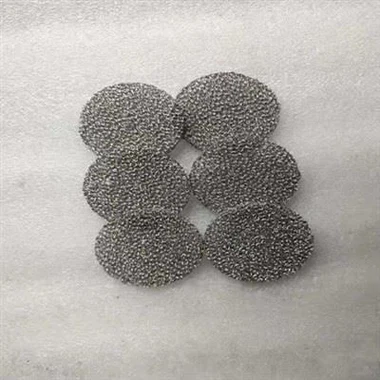
Application of Porous Nickel Foam
Aug 16, 2022
Spongy porous metal copper, nickel, iron and their composite layer porous bodies can be used as electromagnetic shielding materials, chemical catalyst carriers, precious metal replacement recovery, filter carriers and many other fields.
Battery electrode material
Nickel foam is mainly used for battery electrode materials, especially for NiMH batteries, which are widely used in electric bicycles, electric scooters, hybrid cars, mobile phones, and laptop computers.
Catalyst material: The unique open-cell structure, low-pressure input hole, inherent tensile strength and thermal shock resistance make nickel foam the catalyst for automotive catalytic converters, catalytic combustion, and black smoke purifiers for diesel vehicles.
Catalyst carrier: When the engine is cold started, carbon monoxide and hydrocarbons are converted. Due to the thermal conductivity, the foamed nickel catalyst carrier may be superior to the ceramic catalyst carrier. In this sense, the foamed nickel catalyst carrier can be compared with the high temperature steel catalyst carrier or It is superior to the high temperature resistant steel catalyst carrier. Other applications for nickel foam catalysts can include Fischer-Topsch reactions, gas modification, hydrogenation of fine chemicals, and foam catalyst supports.
Fuel cells: Molten carbonate fuel cells usually operate at a temperature between 550-700 °C, and nickel foam can be an electrocatalyst for molten carbonate fuel cells. Nickel foam can be used as a bipolar plate modification material for proton exchange membrane production cells (PEMFC), electrode relay feeders for solid oxide fuel cells (SOFC), and electrode materials in electrolysis. The increased surface area can also be used to generate hydrogen and syngas for fuel cells.
Other applications
Nickel foam can be used as a filter material, a magnetic flow conductor that handles magnetic particles in fluids. Other applications include applications in heat exchange media, hydrogen storage media. my country's nickel foam industry is in good operation and development, and enterprises in this industry are gradually developing towards industrialization and large-scale development. Nickel foam is a sound-absorbing material with excellent performance, which has a high sound absorption coefficient at high frequencies; the sound absorption performance at low frequencies can be improved through the design of the sound-absorbing structure. Nickel foam is also one of the best electrode materials for the manufacture of cadmium-nickel batteries and hydrogen-nickel batteries. The process of preparing nickel foam by electrodeposition technology has been successfully developed through experiments. The base material used is porous open-cell foam plastic. The conductive layer can be prepared by three methods: chemical nickel plating, vacuum nickel plating and immersion conductive adhesive. Nickel, after burning, reduction and annealing process, can obtain nickel foam material with excellent performance.