With the rapid development of new energy electric vehicles and electric aircraft, the demand for extended driving range in both increasingly relies on energy-dense lithium-ion batteries (LIBs)
Dec 08, 2025
With the rapid development of new energy electric vehicles and electric aircraft, the demand for extended driving range in both increasingly relies on energy-dense lithium-ion batteries (LIBs).
Currently, in traditional liquid batteries, the effective transport path length of Li+ ions within the porous electrode is crucial. This length increases with the areal load, directly limiting fast-charging performance. Various strategies have been proposed in the industry, among which electrode thinning is one of the main methods to improve rate performance, but this method comes at the cost of battery energy density.
Solid-state batteries, as the ultimate goal of batteries, face challenges beyond yield and cost; one of the biggest bottlenecks is solving the problem of lithium dendrite formation. Lithium metal is the most promising anode material for batteries, but dendrite growth, the high reactivity of lithium, and volume expansion pose safety hazards to lithium metal batteries, hindering the practical application of lithium metal anodes in rechargeable batteries.
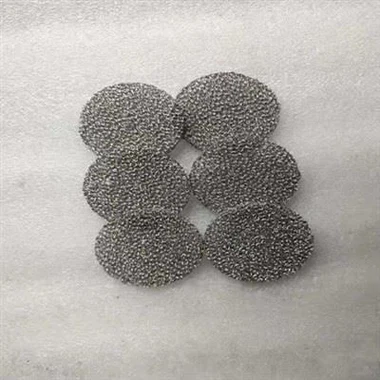
Both of these major pain points currently point to the same solution: foamed copper. Foamed copper, also known as 3D copper, is a new battery material with many unique properties and advantages. Foamed copper is a metallic material with a large number of uniformly distributed interconnected pores, exhibiting good conductivity and ductility. In lithium-ion battery applications, compared to first-generation copper foil current collectors and second-generation composite current collectors, foamed metal current collectors represent the third generation. This third-generation current collector is also a key factor determining whether China can be the first in the world to achieve the industrialization of all-solid-state batteries.
Firstly, foamed copper, as a battery material, possesses high conductivity, which helps improve the charge and discharge efficiency of the battery. Its porous structure increases the contact area between the electrode and the electrolyte, thereby improving the battery's energy density and cycle stability. Traditional current collectors (TCCs), such as solid metal foils including Cu and Al, lack porosity and are impermeable to the electrolyte. Therefore, these TCCs do not facilitate Li+ transport and limit Li+ transport between electrodes to only one side, restricting fast-charging performance.
In contrast, the porous design of foamed copper allows Li+ ions to pass through both the current collector and the separator simultaneously, thus halving the effective Li+ transport distance and increasing the diffusion-limited C-rate performance by four times without affecting energy density. Currently, leading domestic and international high-efficiency battery manufacturers have conducted comparative studies. According to the latest Nature article, batteries using this current collector exhibit high specific energy (276 Wh kg⁻¹) and significant fast-charging capabilities, operating at rates of 4 C (78.3% C/C), 6 C (70.5% C/C), and 10 C (54.3% C/C). This porous current collector design is compatible with existing battery manufacturing processes and other fast-charging strategies, enriching battery configurations and providing better ideas for designing next-generation batteries.
Secondly, regarding the biggest problem in solid-state batteries-lithium dendrite formation-the high surface area of copper foam effectively expands the electrode area, providing more active sites for electrochemical reactions. This leads to higher current density and battery capacity. More importantly, the larger reaction area means a smaller unit current, which will greatly improve lithium dendrite formation. It is already widely used in condensed-state and solid-state batteries in the laboratories of leading battery manufacturers.
Furthermore, copper foam also has good mechanical strength and stability, able to withstand the stress generated during battery cycling, extending battery life. This is also highly attractive for solid-state batteries.
Each GWh battery requires 700 tons of copper for 6m of copper foil, and the composite current collector weighs about 300 tons, requiring about 250 tons of copper. Foamed copper only requires about 100 tons. The significant reduction in copper usage, given the current expectation of long-term copper price increases, can not only save a lot of costs but also significantly improve the battery's energy density.