Technology For Producing Hydrogen Through The Electrolysis Of Water
Jan 13, 2024
Hydrogen is a clean source of energy.the electrolysis of water using an electrode made of electroplated iron-nickel alloy has been demon-started as a technically feasible way of generating hydrogen. electroplated ferric nickel alloy is used as electrode in the electrolysis of water .The method is expected to be used for the mass production of clean fuel, specifically hydrogen, due to its low cost and high efficiency.This technology uses an affordable porous metal material that does not need a precious metal coating. This enables the oxygen bubbles generated by electrolytic water to escape rapidly, thus enhancing production efficiency.

It has been reported that the iron-nickel alloy electrode is the electrode with the highest oxygen production efficiency in the alkaline electrolyte.The process uses nickel and iron as raw materials, which are inexpensive and easy to manufacture. This is in contrast to other water electrolysis technologies that require precious rare metals as catalysts and electrode materials.The electrode possesses a rich pore structure and high specific surface area, and its OER catalytic activity surpasses that of many previously reported nickel-based catalysts.The intrinsic catalytic activity of porous iron-nickel alloy electrodes is affected by their Fe content. This activity is highest when the Fe mole fraction reaches 15%.Ni0.85Fe0.15-180-3 exhibits high stability under industrial water electrolysis conditions, and its performance after 250 hours of operation shows no significant degradation.
During electrolysis, Electric current decomposes water into hydrogen and oxygen. The low efficiency, high cost of electrode oxygen production and the consumption of a lot of electricity are one of the main technical difficulties for the electrolysis of water to achieve industrial production.
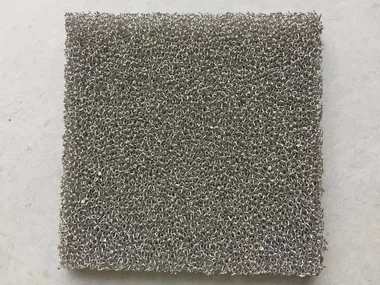
The iron-nickel alloy contains numerous micro-pores, each approximately 200 microns in diameter, which is roughly twice the diameter of a human hair.There are also numerous micropores, each about 50 nanometres in diameter, in the ultra-thin nickel-iron alloy coating.The electrode has a large surface area due to micropores in both the coating and interior. This facilitates the release and escape of oxygen generated during electrolysis.Insufficient oxygen bubble escape is often the cause of reduced use of the electrodes.
Hydrogen combustion produces only water, making it a clean and efficient energy source. If it can be produced on a large scale and at a low cost, it could help meet the world's growing energy demand, reduce pollution, and curb global warming.
The use of high-activity and stability nickel alloy electrodes shows promise in alkaline water electrolysis. The successful preparation of multistage porous structure electrodes formed under strong gas evolution also provides new ideas for optimizing the structure of other gas evolution electrodes.