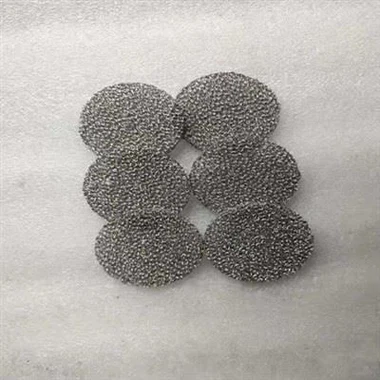
Market prospects and material selection advantages of iron foam in the application of high-pressure membraneless water electrolysis hydrogen production system
May 01, 2025
Market prospects and material selection advantages of iron foam in the application of high-pressure membraneless water electrolysis hydrogen production system
I. Market prospects analysis
1. Green hydrogen demand drive
Global carbon neutrality goal: Countries are accelerating the promotion of hydrogen energy strategies (such as the EU Hydrogen Energy Strategy and China's "dual carbon" goals). The demand for green hydrogen as a clean energy carrier has surged. High-voltage electrolysis technology has become a key direction due to its high efficiency and adaptability to renewable energy.
Industrial decarbonization rigid demand: High-carbon emission industries such as steel and chemical industry need large-scale green hydrogen to replace fossil energy. High-voltage membraneless electrolysis system (no complex diaphragm required, suitable for continuous production) meets the needs of industrial scenarios.
Cost reduction potential: With the maturity of technology and large-scale production, the cost of green hydrogen is expected to drop from the current 3-6 US dollars/kg to 1-2 US dollars/kg in 2030, promoting market penetration.
2. Advantages of high-voltage membraneless electrolysis technology
Structural simplification and cost reduction: The membraneless design reduces system components (such as proton exchange membranes) and reduces maintenance costs; high-pressure direct hydrogen production reduces subsequent compression energy consumption and improves overall efficiency by 10%-15%.
Adapting to fluctuations in renewable energy: High-voltage systems can adjust power input by quickly responding to electrolyte flow/pressure, and are more suitable for absorbing unstable power sources such as wind power and photovoltaics.
Market size forecast: The global electrolyzer market will be approximately US$3 billion in 2023 and is expected to exceed US$12 billion in 2030 (CAGR >20%), of which the proportion of high-voltage membraneless technology is expected to increase from less than 5% to 15%-20%.
3. Competitive positioning of foamed iron electrodes
Substituting for precious metal catalysts: Traditional electrolyzers rely on precious metal catalysts such as platinum and iridium (cost share >30%), and foamed iron, as a low-cost iron-based material (cost is only 1%-5% of precious metals), is in line with the industry's cost reduction trend.
Technical adaptability: The high specific surface area and porous structure of foamed iron naturally adapt to the gas-liquid two-phase flow requirements of high-pressure membraneless systems, which can improve the reaction kinetic efficiency.
Industry chain maturity: The mature foamed metal preparation processes in the steel industry (such as powder metallurgy and electrodeposition) can be quickly migrated to the hydrogen energy field, with low supply chain risks.
2. Analysis of material selection advantages
1. Core performance advantages
Ultra-high specific surface area: The porosity of foamed iron is >90%, and the effective active area is 50-100 times that of flat electrodes, which significantly improves the efficiency of hydrogen evolution reaction (HER) and reduces the unit energy consumption of hydrogen production.
Mechanical strength and pressure resistance: Iron-based foam materials still maintain structural stability under high pressure (30MPa+), avoiding the collapse problem of traditional porous materials (such as carbon-based).
Optimized corrosion resistance: Through surface alloying (such as nickel plating, chromium doping) or in-situ oxidation treatment, a life of >10,000 hours can be achieved in alkaline electrolyte to meet industrialization needs.
2. Economic advantages
Extremely low material cost: The raw material of foamed iron is a bulk commodity (iron powder/steel matrix), with a cost of about US$10-50/kg, which is much lower than nickel-based foam (US$200-500/kg) or precious metal electrodes.
Manufacturing process compatibility: Mature processes (such as powder sintering and vapor deposition) can be used for large-scale production, with low equipment investment and suitable for rapid expansion.
Life cycle cost advantage: Long electrode replacement cycle (with detachable design), maintenance cost is 60%-80% lower than that of precious metal electrodes.
3. Potential for technology iteration
Large space for composite modification: The activity can be further improved by loading non-precious metal catalysts (such as NiFe oxide and MoS₂) on the surface, while retaining the cost advantage of foamed iron.
Adaptive system innovation: The porous structure of foamed iron can be combined with new technologies such as 3D printing flow channels and pulse electrolysis to optimize hydrogen production rate and energy efficiency.
III. Potential challenges and responses
1. Technology maturity: The stability of long-term operation under high pressure needs to be verified, and it is recommended to conduct accelerated aging tests in conjunction with scientific research institutions.
2. Consistency of large-scale production: Optimize the pore uniformity control process and introduce an AI quality inspection system.
3. Market competition: Pay attention to the technological progress of nickel-based foams and titanium-based porous materials, and continuously iterate the performance of foamed iron.
4. Recommendations for commercialization paths
1. Short-term (1-3 years):
- Focus on scenarios such as industrial by-product hydrogen recovery and distributed hydrogen refueling stations, and launch modular high-voltage membraneless electrolysis demonstration projects.
- Cooperate with steel companies to customize low-cost foam iron electrodes and establish a supply chain.
2. Medium-term (3-5 years):
- Promote the "foam iron electrode + non-precious metal catalyst" standardization scheme to seize the market of small and medium-sized electrolyzers.
- Participate in the green hydrogen certification system and bind renewable energy hydrogen production projects.
3. Long-term (5-10 years):
- Layout large-scale applications such as offshore wind power hydrogen production and green ammonia synthesis, and become a core material supplier for high-voltage electrolysis technology.
Conclusion
With its advantages of high specific surface area, low cost, and high-voltage adaptability, foam iron is expected to become the "ideal electrode material" for high-voltage membraneless electrolysis hydrogen production systems. With the outbreak of the green hydrogen market and technological iterations, its market share will increase significantly. It is recommended to accelerate technical verification and industrial chain collaboration to seize the first-mover advantage.