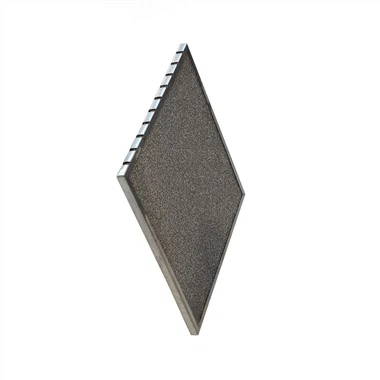
SOFC × Foamed Copper-Manganese Alloy
Apr 13, 2026
SOFC × Foamed Copper-Manganese Alloy | New Materials Empowering a Stronger "High-Efficiency Heart" for Energy Transition
Driven by both global carbon neutrality and the explosive growth of computing power, solid oxide fuel cells (SOFCs) are becoming an indispensable "high-efficiency heart" for energy transition, thanks to their core advantages of being all-solid-state, highly efficient, and widely adaptable. Our newly developed foamed copper-manganese alloy, a key core material for SOFCs, is injecting powerful performance into this "heart," jointly propelling SOFC technology from demonstration to mass production and accelerating the implementation of energy transformation.
I. SOFC: The "High-Efficiency Heart" of Energy Transition, with Irreplaceable Core Advantages
SOFCs directly convert chemical energy into electrical energy through electrochemical principles, eliminating the need for traditional combustion processes. Three core advantages solidify its industry position:
- Top Efficiency: Single-cycle power generation efficiency exceeds 60%, and combined heat and power (CHP) efficiency reaches 85%, far surpassing traditional gas turbines (30%-40%), achieving ultimate energy utilization.
- Zero-Carbon Paradigm: Near-zero emissions of nitrogen and sulfur oxides, with carbon emissions only one-third that of coal-fired power, perfectly aligning with dual-carbon goals and serving as a core carrier of clean and low-carbon energy.
- Fuel Flexibility: Compatible with various fuels such as hydrogen, natural gas, and biogas, requiring no complex pretreatment, providing a flexible solution for diversified energy supply.
Currently, the SOFC industry is on the eve of explosive industrialization, with the global market size projected to exceed US$10 billion by 2030, boasting a compound annual growth rate of over 30%. AI data centers are the largest growth engine, while also widely covering core scenarios such as industrial and commercial cogeneration, industrial low-carbon transformation, and remote grid power supply, continuously releasing market potential.
II. Foamed Copper-Manganese Alloy: The "Hardcore Enabler" of Core SOFC Materials
In the SOFC industry chain, "materials are king," and the advent of our foamed copper-manganese alloy is breaking through key material bottlenecks in the industry, providing core support for SOFC performance upgrades, and achieving an innovative breakthrough in the integration of three-dimensional structure and function.
Core Performance, Precisely Adapted to the Stringent Requirements of SOFC
- Three-Dimensional Interconnected Porous Structure: Using open-cell polymer sponge as a template, highly interconnected channels are replicated, resulting in high porosity and a large specific surface area. This significantly reduces gas transport resistance, enhances mass transfer efficiency, and adapts to various stack structure designs.
- High-Temperature Stability and Protection: Under high-temperature conditions, a dense (Cu,Mn)₃O₄ spinel protective layer is generated in situ, blocking oxygen diffusion, inhibiting matrix oxidation, maintaining macroscopic structural integrity, and extending service life.
- High-Efficiency Conductivity: The spinel lattice electron transition mechanism endows it with excellent high-temperature conductivity while also possessing superior mechanical strength, balancing current collection and structural support functions.
Technological Breakthrough, Achieving Domestic Substitution and Performance Upgrade
Our foamed copper-manganese alloy has passed multiple authoritative verifications and has been successfully applied to core components of SOFC cathode current collectors and connectors, achieving three major breakthroughs:
- Performance Verification: A leading domestic customer has completed approximately 100kW stack-up testing with excellent results, entering the P2-P3 verification stage, with performance comparable to similar international products. - Process Innovation: Utilizing a patented continuous strip preparation technology, it avoids the problems of closed pores and impurity residues in traditional processes, resulting in high purity, environmentally friendly and controllable performance, suitable for large-scale mass production.
- Domestic Substitution: Breaking the overseas material monopoly, it achieves supply breakthroughs in areas such as electrolyte membranes and special conductive materials, contributing to the self-reliance and controllability of the SOFC industry chain.
III. Strong Alliance: Foamed Copper-Manganese Alloy Drives SOFC to New Heights of Industrialization
Cost Reduction and Efficiency Improvement, Accelerating Commercialization
With the advancement of foamed copper-manganese alloy mass production and domestic substitution, the cost of SOFC systems will significantly decrease. Its lightweight and highly adaptable characteristics reduce the difficulty of stack assembly and maintenance costs, helping SOFC achieve grid parity without subsidies around 2030, promoting technology popularization.
Expanding Application Scenarios, Broadening the Boundaries of Energy Applications
- AI Data Centers: Providing stable, low-carbon baseload power for explosive computing power growth, the high conductivity and high-temperature resistance of foamed copper-manganese alloy ensure 24-hour stable operation of data centers.
- Industrial Low-Carbon Transformation: Adaptable to high-temperature industrial conditions, assisting energy-intensive industries such as steel and chemicals in achieving carbon reduction and upgrading, and lowering energy costs.
- Mobile Energy Sector: Supporting the expansion of SOFC into mobile scenarios such as ships and heavy trucks, the flexible formability of foamed copper-manganese alloys adapts to the structural designs of various mobile devices.
Technological Iteration, Establishing a Closed Loop for "Electricity-Hydrogen-Energy Storage"
Reversible SOFC (RSOC) is a key technology for future green hydrogen production and long-term energy storage. Foamed copper-manganese alloys, with their excellent bidirectional conversion performance, can achieve integrated power generation, hydrogen production, and energy storage, providing core support for new power systems and promoting energy recycling.
Conclusion
SOFCs, with their high efficiency, cleanliness, and flexibility, have become the core engine of energy transformation; and our foamed copper-manganese alloys are injecting continuous power into this "high-efficiency heart" with cutting-edge material technology. In the future, we will continue to deepen our research and development of new materials, enhance collaboration across the SOFC industry chain, and use a dual-engine approach of "new materials + new energy" to help achieve global carbon neutrality and jointly build a new energy ecosystem for the future!