Heat dissipation technology of ultraviolet LED lamp panel and application prospect of foam copper material
Mar 15, 2025
1. Thermal Generation Mechanisms and Cooling Challenges in UV LED Lamps
During UV LED operation, only a fraction of energy is converted into effective ultraviolet radiation through the PN junction, with the remainder released as heat. Key thermal challenges include:
Junction Temperature Sensitivity: Semiconductor physics dictate a 25% acceleration in light decay rate per 10°C junction temperature increase.
Heat Generation Sources:
Resistive Losses: Joule heating from electrode/material internal resistance (typically 2-5Ω).
Non-Radiative Recombination: 30-40% carrier recombination at crystal defects releases thermal energy.
Photon Absorption: ~90% photon-to-lattice energy conversion through internal reflections.
Conventional air/water cooling systems face critical limitations in high-density industrial applications:
Space Constraints: 40-60% volume occupied by cooling components.
Energy Penalty: Active cooling consumes 15-25% of total system power.
Maintenance Complexity: Frequent filter replacements required in particle-rich environments.
2. Thermal Advantages of Copper Foam
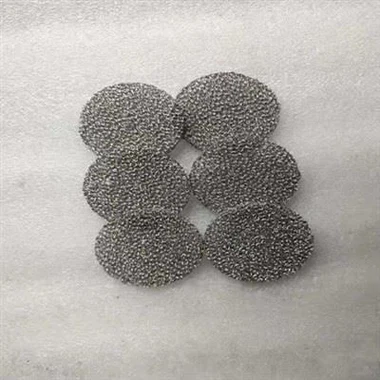
Copper foam (>95% porosity) revolutionizes thermal management through:
Enhanced Thermal Conductivity:
Base copper conductivity: 385 W/(m·K)
Effective conductivity multiplier: 3-5× vs. aluminum substrates via fractal-like 3D network.
Structural Efficiency:
Density: 0.45 g/cm³ (1/20 solid copper)
Compressive strength: 8-12 MPa at 600°C.
Fluid Dynamics Optimization:
Permeability: 1.2-3.5×10⁻⁷ m² enables 30% airflow enhancement.
Manufacturing Processes:
Template Deposition: Polyurethane-template chemical vapor deposition.
Sintering: Precise pore size control (0.2-4 mm) via powder metallurgy.
3. Copper Foam Applications in LED Thermal Management
Integrated Cooling Solutions:
Direct bonding reduces thermal interface resistance by 70% (vs. TIM materials).
Phase-change composite systems achieve 20-30°C junction temperature reduction.
Energy-Space Synergy:
Eliminates 80% water cooling infrastructure, reducing auxiliary power by 40%.
Harsh Environment Adaptation:
Passivated surfaces withstand 85% RH/5% H₂S corrosion (ASTM B117).
Case Study: Industrial UV curing system using Feimeite copper foam:
Service life: 600 → 1,200 hours
Luminous decay rate: Reduced from 15% to 9%/1,000h
Maintenance cost: 35% annual reduction per unit.
4. Technological Development Trends
Material Engineering:
Al₂O₃/TiN coatings improve oxidation resistance (1,000h@500°C).
Smart Thermal Systems:
Hybrid phase-change/heat pipe solutions enable <1°C/mm² thermal gradients.
Additive Manufacturing:
Laser 3D printing achieves 50μm pore resolution for 500W/cm² thermal loads.
5. Future Outlook
Copper foam's synergistic combination of high conductivity (400+ W/mK modified alloys) and ultra-low density positions it as the cornerstone of next-gen UV LED systems. With production costs projected to drop 30% by 2026 through roll-to-roll manufacturing, adoption rates in high-power LEDs (365-405nm) are forecast to reach 65% market penetration by 2030. Feimeite's graded-porosity copper foam solutions are poised to drive industry transformation across UV curing, photocatalytic reactors, and biomedical sterilization.