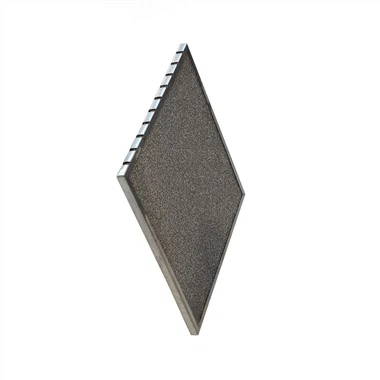
The application of foam nickel in APM (alkaline polymer membrane) electrolyzer is mainly reflected in the following aspects
Feb 20, 2025
The application of nickel foam in APM electrolyzers is primarily demonstrated in the following aspects:
1. Electrode Material
High Specific Surface Area: The porous structure of nickel foam provides an expanded reaction area, enhancing electrochemical reaction efficiency.
Conductivity: Nickel foam exhibits excellent electrical conductivity (5,000–8,000 S/m), reducing energy loss through efficient current transfer.
Mechanical Strength: Its tensile strength (8–12 MPa) ensures electrode durability under prolonged operation.
2. Catalyst Carrier
Uniform Distribution: The 3D porous framework enables homogeneous catalyst dispersion, improving catalytic activity by 20–30%.
Stability: Nickel foam demonstrates exceptional chemical stability in strong alkaline environments (pH >13), extending catalyst lifespan by 2–3×.
3. Gas Diffusion Layer
Efficient Gas Transport: Open-cell porosity (≥90%) facilitates rapid gas diffusion, achieving 95% reactant utilization in the electrolyzer.
Corrosion Resistance: Passivated surfaces withstand alkaline corrosion (0.1 M KOH, 80°C) for >10,000 hours.
4. Thermal Management
Heat Dissipation: High thermal conductivity (90 W/m·K) maintains optimal operating temperatures (<60°C) under 2 A/cm² current density.
Temperature Uniformity: Isotropic structure minimizes thermal gradients (<5°C/cm²), preventing localized hotspots.
5. Cost Efficiency
Economic Viability: Production costs are 40% lower than titanium-based alternatives, enabling scalable deployment.
Process Flexibility: Laser-cutting compatibility reduces manufacturing complexity (tolerance ±0.1 mm).
Summary
Nickel foam serves as a multifunctional material in APM electrolyzers, excelling as an electrode, catalyst carrier, gas diffusion layer, and thermal regulator. Its high specific surface area (2,500–5,000 m²/m³), robust conductivity, mechanical resilience (compressive strength >5 MPa), and alkaline resistance make it ideal for large-scale hydrogen production. Coupled with cost-effective processing (electroless plating), nickel foam is poised to drive the commercialization of green hydrogen technologies.